

Myo-Inositol and PCOS — What Every Irish Woman Should Know
If you’ve been diagnosed with polycystic ovary syndrome — or suspect you might have it — you’ll know how frustrating and complex the condition can be. Irregular periods, weight gain, unwanted hair growth, difficulty conceiving, mood changes, fatigue — PCOS can affect almost every area of daily life, and for many women, finding effective support feels like an uphill battle.
One supplement that has been quietly attracting serious scientific attention is myo-inositol — a naturally occurring, vitamin-like compound that research suggests may offer meaningful support for many of the most challenging aspects of PCOS. Here’s what the evidence actually says.
What is PCOS — and Why is it So Hard to Manage?
PCOS is the most common endocrine disorder in women of reproductive age, affecting up to 15% of women during their reproductive years and accounting for up to 30% of infertility in couples seeking treatment. Despite how common it is, it remains widely underdiagnosed — many women live with symptoms for years before receiving a clear diagnosis.
It’s worth noting that PCOS is increasingly being referred to as polyendocrine metabolic ovarian syndrome (PMOS) — a name that better reflects just how wide-ranging its effects actually are. Far from being purely an ovarian condition, PCOS affects hormonal balance, insulin function, metabolism, cardiovascular health, mental health, and more.
The core features of PCOS typically include some combination of:
- Irregular or absent periods
- Excess androgen activity (leading to acne, oily skin, unwanted hair growth, or hair loss)
- Multiple underdeveloped follicles on the ovaries
- Insulin resistance
- Difficulty conceiving
- Weight gain, particularly around the abdomen
- Mood disturbance, anxiety, and depression
Because the condition is so multifaceted, there is no single treatment that addresses everything. Effective management usually involves a combination of dietary changes, lifestyle strategies, and targeted nutritional support — and this is where myo-inositol comes in.

What is Myo-Inositol?
Myo-inositol is one of nine different forms of inositol — a naturally occurring substance produced in the body from glucose. Often described as a vitamin-like compound, it is sometimes grouped with the B complex vitamins, though because the body produces it independently it is not classified as an essential nutrient.
It is found naturally in foods including organ meats, fruit, grains, nuts, and beans — but food sources alone are unlikely to supply the therapeutic doses that research suggests are beneficial for women with PCOS. This is where supplementation becomes relevant.
Why Does Myo-Inositol Matter for PCOS?
The connection between myo-inositol and PCOS centres on insulin signalling. Myo-inositol plays a key role in how the body processes and responds to insulin — it is directly involved in the metabolism and transport of glucose, and acts as a precursor to D-chiro-inositol, a compound that helps mediate insulin’s actions in the body.
Low levels of myo-inositol and D-chiro-inositol have been consistently observed in women with impaired insulin sensitivity and PCOS. Since insulin resistance is a central feature of PCOS in many women — driving excess androgen production, disrupting ovulation, and contributing to weight gain — supporting healthy insulin signalling has wide-ranging knock-on benefits across the condition.
Shop our Myo-Inositol products here
What Does the Clinical Research Show?
This is where myo-inositol genuinely stands out from many supplements marketed at women with PCOS — the research behind it is substantial, specific, and rigorous.
Ovulation and Fertility
In a double-blind clinical trial, women with PCOS who took 4 grams of myo-inositol daily alongside folic acid showed significantly improved ovulation rates — 16 out of 23 women in the myo-inositol group ovulated, compared to just 4 out of 19 in the placebo group. The same study also found a 66% reduction in total testosterone and a 73% reduction in free testosterone — meaningful reductions in the androgen excess that drives so many PCOS symptoms.
Menstrual Regularity
A study in overweight women with PCOS found that 12 weeks of myo-inositol supplementation improved insulin sensitivity and reproductive hormone balance and completely restored the menstrual cycle in all women whose periods had been absent or irregular.
Hirsutism and Excess Hair Growth
A six-month prospective clinical study found that myo-inositol significantly reduced hirsutism and hyperandrogenism — two of the most distressing and visible symptoms of PCOS for many women.
IVF Outcomes
For women with PCOS undergoing IVF, research published in the European Review for Medical and Pharmacological Sciences found that myo-inositol supplementation significantly improved both the number and quality of oocytes (egg cells) retrieved, leading researchers to conclude it may be a useful addition to treatment for women undergoing ovulation induction.
Mental Health
A 2018 randomised controlled trial found that 12 weeks of myo-inositol supplementation produced significantly better outcomes for general health, depression, anxiety, and stress compared to metformin. Myo-inositol also improved markers of oxidative stress, which is elevated in many women with the condition. This is consistent with earlier research showing myo-inositol has a role in activating serotonin receptors — the brain’s primary mood-regulating neurotransmitter.
Comparison with Metformin
Multiple randomised controlled trials have compared myo-inositol directly with metformin — the pharmaceutical drug most prescribed for insulin resistance in PCOS. Several studies found both treatments produced broadly similar improvements in insulin sensitivity, BMI, and menstrual regularity, with myo-inositol offering a comparable effect without the side effect profile associated with metformin. This does not mean myo-inositol should replace prescribed medication — but it does suggest it may be a meaningful complementary or alternative option for some women, under appropriate medical guidance.
How Much Myo-Inositol Should You Take?
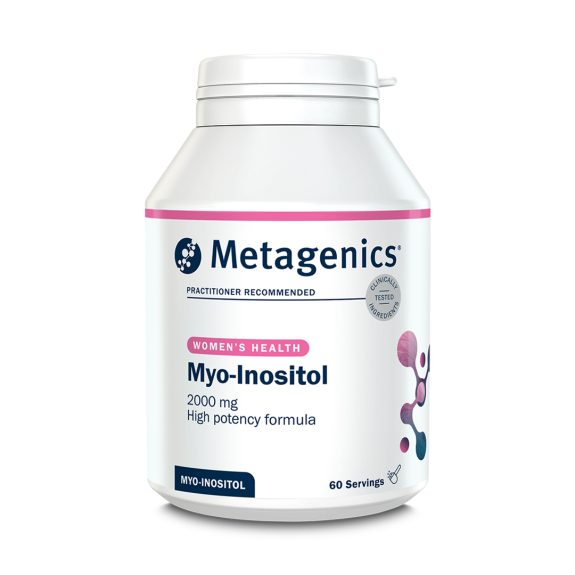
Current research suggests that for women with PCOS, 2,000mg taken once or twice daily (totalling up to 4,000mg per day) is the effective protocol used in most clinical studies, ideally alongside folic acid. A review period of at least three months is generally recommended before assessing results.
Powdered forms of myo-inositol tend to be the most practical way to achieve clinical doses.
Is It Safe?
Myo-inositol is generally well tolerated. Mild side effects — including nausea, flatulence, or digestive discomfort — have been reported in some studies, but these tend to occur at doses higher than those typically recommended.
Women with bipolar disorder are advised to avoid myo-inositol until further research clarifies its safety in this group. As with any supplement, women with existing medical conditions or taking prescribed medication should speak with their GP or pharmacist before starting.
The Bottom Line
For Irish women managing the complex and often exhausting reality of PCOS, myo-inositol represents one of the more evidence-backed nutritional options available. Its benefits span insulin sensitivity, hormonal balance, ovulation, menstrual regularity, fertility, and mental health — addressing many of the core challenges of the condition in one compound.
It is not a cure, and it works best as part of a broader approach that includes dietary changes, lifestyle strategies, and ongoing medical support. But the clinical evidence is promising, and for many women it may be a genuinely useful addition to their management plan.
If you’d like advice on whether myo-inositol is right for you, our pharmacy team at Ballyduff Pharmacy is here to help. We stock a range of myo-inositol supplements and women’s health products — visit us in store in Ballyduff, Co. Kerry, or order online at ballyduffpharmacy.com.
Important Disclaimer
The information in this article is provided for educational purposes only and should not be considered medical advice. Food supplements should not be used as a substitute for a varied, balanced diet and a healthy lifestyle. Always seek advice from your GP or pharmacist before starting any new supplement, particularly if you have a medical condition or are taking prescribed medication.